Stay, Wait
Promise, Return
Wind, Fire, Languages, Amazed & Perplexed
Preach, Acceptance, Opposition, Persecution
Salvation, Jew and Gentile
Appoint, Rescue, Send
Witness to the ends of the earth
Synagogue, Jew, Gentile
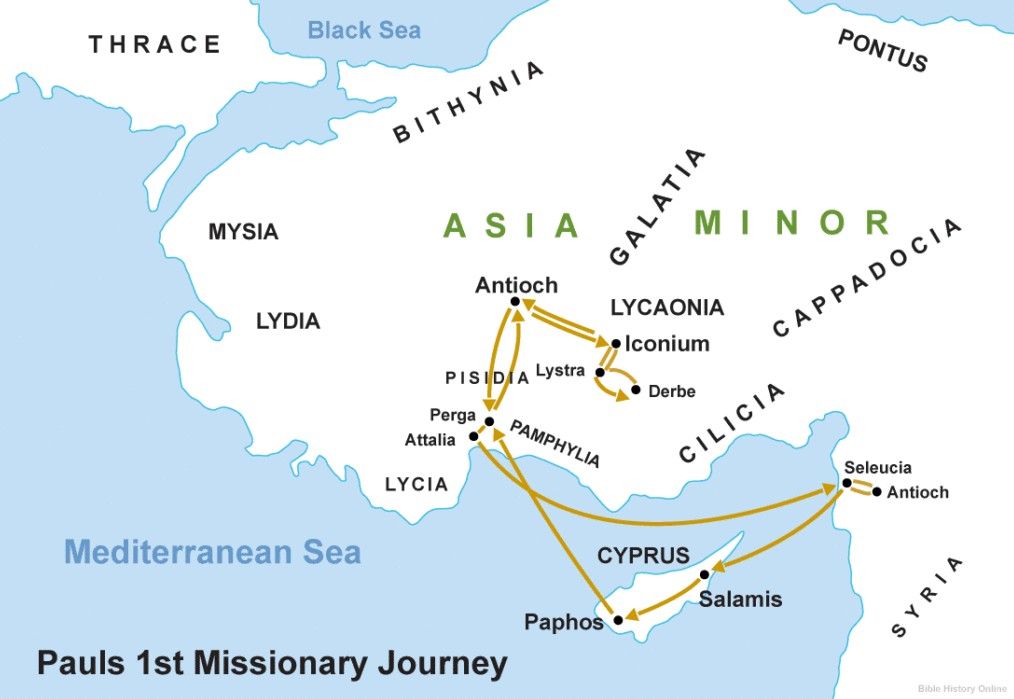
"To rescue the church from the teaching of the Judaisers, reassert his apostolic authority, and to instruct regarding appropriate Christian living given a law-free gospel." 6
"Acts makes it clear that the Thessalonian church was founded amid much opposition (17:1–9). The situation became so intense that Paul and Silas had to slip away under cover of darkness (Acts 17:10)." 2
A note on dating: "Scholars debate exactly when Paul wrote the letter to the Galatians, mainly because it is difficult to reconcile some of his autobiographical details in the letter with events recorded in Acts." 6
Synagogue, Jew, Gentile
Sharp Disagreement, Separate Ways
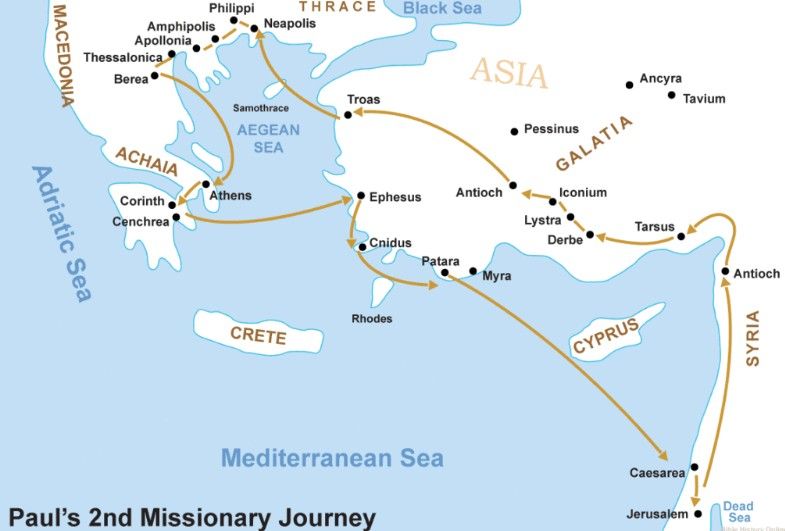
"Paul wrote to encourage the Thessalonians in three areas: to hold fast to their faith; to live faithfully as they awaited the coming of Jesus in glory; and to confront troublemakers who were burdening and disrupting the church." 2
"It is not clear who wrote Hebrews. In contrast to Paul’s thirteen canonical letters, Hebrews does not name its author. It is written in a Greek style that seems different from Paul’s. It never uses the phrase “Christ Jesus,” a title used elsewhere by Paul some ninety times. It lacks the Pauline greeting at the letter’s beginning. Ancient church leaders were accordingly unsure of who wrote it" 3
"To remind believers in Thessalonica what he had previously taught them and reinforce what they already knew." 2
"Acts makes it clear that the Thessalonian church was founded amid much opposition (17:1–9). The situation became so intense that Paul and Silas had to slip away under cover of darkness (Acts 17:10)." 3
"Paul wrote to encourage the Thessalonians in three areas: to hold fast to their faith; to live faithfully as they awaited the coming of Jesus in glory; and to confront troublemakers who were burdening and disrupting the church." 2
"Much of what has already been said about 1 Thessalonians sheds light on 2 Thessalonians since the two letters were written only a few months apart. Paul continues to commend their faith and love (1:3) and their perseverance under trial (1:4). He continues to speak of Christ’s return (1:5–10) and other eschatological matters (2:1–12). In these areas Paul’s second letter to the Thessalonian church is in some ways a shortened restatement of his first one." 3
Timothy, Apollos, Baptism
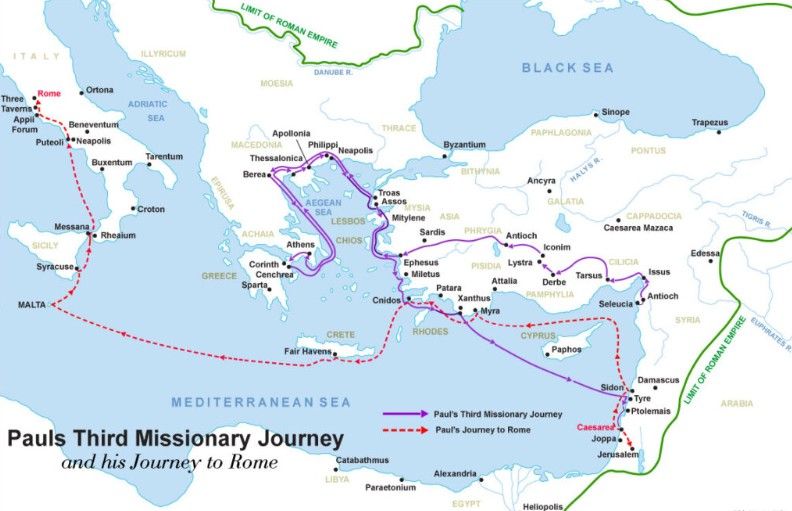
"The Corinthian congregation was being torn apart by quarreling (1 Cor. 1:11). Dissatisfaction had arisen regarding Paul’s authority (1 Cor. 4:3). Paul anticipated having to make a visit to address the complaints (1 Cor. 4:19). The distance from Ephesus to Corinth was more than 250 miles by boat—not a casual junket. Apparently Paul could not make it immediately after hearing of the problems. So he wrote (or dictated: 1 Cor. 16:21 may mark the point at which Paul enters his own closing words, someone else having penned the rest as Paul spoke) a lengthy letter to quell the disturbance and give positive guidance in his absence. He sent Timothy to them to deliver the letter (1 Cor. 4:17). The details that Paul took up are evident from the following outline." 3
"The Corinthian church holds the dubious distinction of being the most confused congregation, or group of congregations, that Paul addressed. Despite Paul’s eighteen-month church-planting labors there (Acts 18:11), the Corinthian believers seemed to have difficulty charting a consistent pattern of Christian belief and lifestyle." 3
"Paul writes with concern to the Corinthians, explaining the reason for his change of itinerary, encouraging them to live in love and unity, and to complete the collection of money for the relief of those in need. He also stresses his authenticity as an apostle." 2
"It is always challenging to interpret Paul’s letters because they represent only one side of a two-sided communication process. We must infer from what Paul says to what we think the Corinthians were saying or doing. (This is sometimes called “mirror reading.")" 3
"Romans is a complex book, especially since there is disagreement over the main reason why Paul wrote the letter to a cluster of churches that he had never visited" 6
"Paul sets out the doctrine of justification by faith in Jesus Christ in all its complexity, and—more broadly—righteousness from God. Paul also expresses a deep concern for Israel." 2
Peril, Shipwreck, Hardship
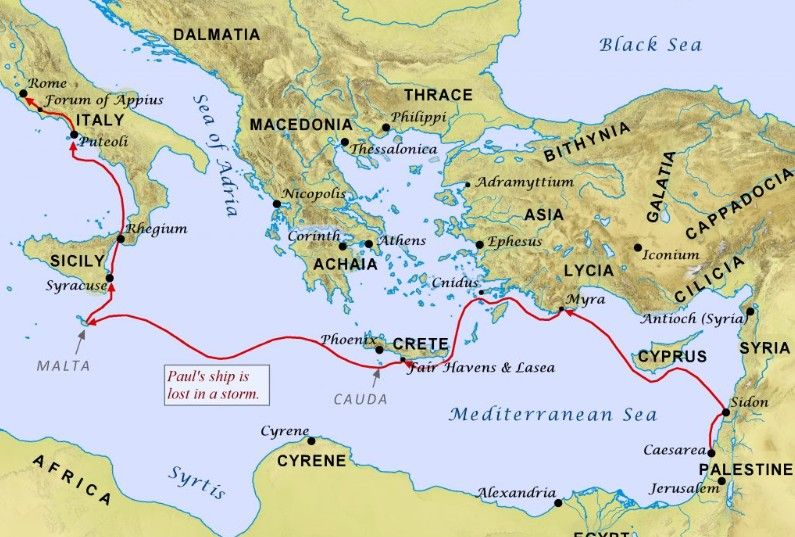
"Paul reveals the joy and beauty of Christian living, coupled with a hymn of praise to Christ, celebrating both his humility and his exaltation. He also encourages them to stand firm in the face of persecution; and warns the Philippians against the Judaizers (legalists) and antinomians (libertines) among them." 2
Ephesians, Philippians, Colossians, and Philemon are often called the Prison Epistles because Paul wrote them while imprisoned (most likely in Rome).
"Paul writes about Christ and the church, by which means the wisdom and grace of God are revealed, via the bestowing of spiritual gifts from the indwelling Holy Spirit, in order to facilitate the expression of genuine, godly ministry." 2
Ephesians, Philippians, Colossians, and Philemon are often called the Prison Epistles because Paul wrote them while imprisoned (most likely in Rome).
"Paul attacks errors in the church, presenting Jesus Christ as the only antidote for these false teachings, and presents him alone as adequate for the salvation of all people." 2
"This letter deals primarily with doctrinal heresy that possibly mixed Judaism with some early form of Gnosticism. Jesus was superhuman, but not truly God. He was greater than human beings, but not great enough to be the Savior. Those who believe in Christ must go through angels to get to the deeper levels of spirituality. Paul built a positive case for the Christian truth in order to show the Colossians the futility of ideas such as these." 4
"Paul offers two reasons for writing this letter to Philemon: (1) an appeal for him to receive Onesimus as a brother in Christ (1:10–17), and (2) a request for him to prepare a guest room for Paul’s coming visit (1:22)." 4
"Roman law in some respects treated slaves as persons but also viewed them economically as property. While slaves could hold property and buy their freedom, they also could be beaten and interrogated under torture. In the rare case where a head of a household was murdered by one of his slaves, all of his slaves would be executed. Thus, the term “dear brother” (Phm 1:16), as Paul calls Onesimus, indicated something more than a slave." 3
"Luke, the author of the Gospel that bears his name, spent a great deal of time and effort digging up just such evidence to present to THEOPHILUS, the Roman official who wanted to know what Christianity was all about. The opening lines of his Gospel reveal this plainly: “Many have undertaken to draw up an account of the things that have been fulfilled among us, just as they were handed down to us by those who from the first were eyewitnesses and servants of the word. With this in mind, since I myself have carefully investigated everything from the beginning, I too decided to write an orderly account for you, most excellent Theophilus, so that you may know the certainty of the things you have been taught” (Luke 1:1–4)." 3
"Luke tells us his fundamental purpose in writing his Gospel. He wants Theophilus to know that faith in Jesus rests on historical facts that stand up under the most severe scrutiny, founded as they are on firsthand testimony. Luke develops his narrative of the life of Jesus to substantiate this, and he makes use of numerous details and themes." 3
To chronicle the establishment and growth of the early church and its spread to the ends of the earth. While the gospel of Luke is the story of the life, death and resurrection of Jesus Christ, Acts may be seen as the continued work of Jesus through the work of the Holy Spirit
"The date of Luke’s writing is not easily determined. The author possibly concluded his account 2 years after Paul’s imprisonment in Rome, about A.D. 62 (Acts 28:30)" 3
"Paul writes to Timothy about the church in Ephesus, urging him to actively refute false teaching, which had taken hold there, and also to give instructions for worship and administration, including the qualifications and duties of church leaders." 2
"1 Timothy, 2 Timothy, and Titus. These three are sometimes called the Pastoral Epistles. The term, coined in the eighteenth century, is fitting for two reasons. First, all three letters show pastoral concern for their recipients, Timothy and Titus. Second, all three deal with pastoral matters involving the care of souls and the orderly conduct of God’s people in the church as well as in the world." 3
"Paul writes to Titus, emphasizing the importance of maintaining church order, and of eliminating false teaching, to be followed by the promotion of sound doctrine." 2
"1 Timothy, 2 Timothy, and Titus. These three are sometimes called the Pastoral Epistles. The term, coined in the eighteenth century, is fitting for two reasons. First, all three letters show pastoral concern for their recipients, Timothy and Titus. Second, all three deal with pastoral matters involving the care of souls and the orderly conduct of God’s people in the church as well as in the world." 3
"Paul writes to Timothy about the church in Ephesus, urging him to actively refute false teaching, which had taken hold there, and also to give instructions for worship and administration, including the qualifications and duties of church leaders." 2
"1 Timothy, 2 Timothy, and Titus. These three are sometimes called the Pastoral Epistles. The term, coined in the eighteenth century, is fitting for two reasons. First, all three letters show pastoral concern for their recipients, Timothy and Titus. Second, all three deal with pastoral matters involving the care of souls and the orderly conduct of God’s people in the church as well as in the world." 3
Martyrdom, Persecution, Nero
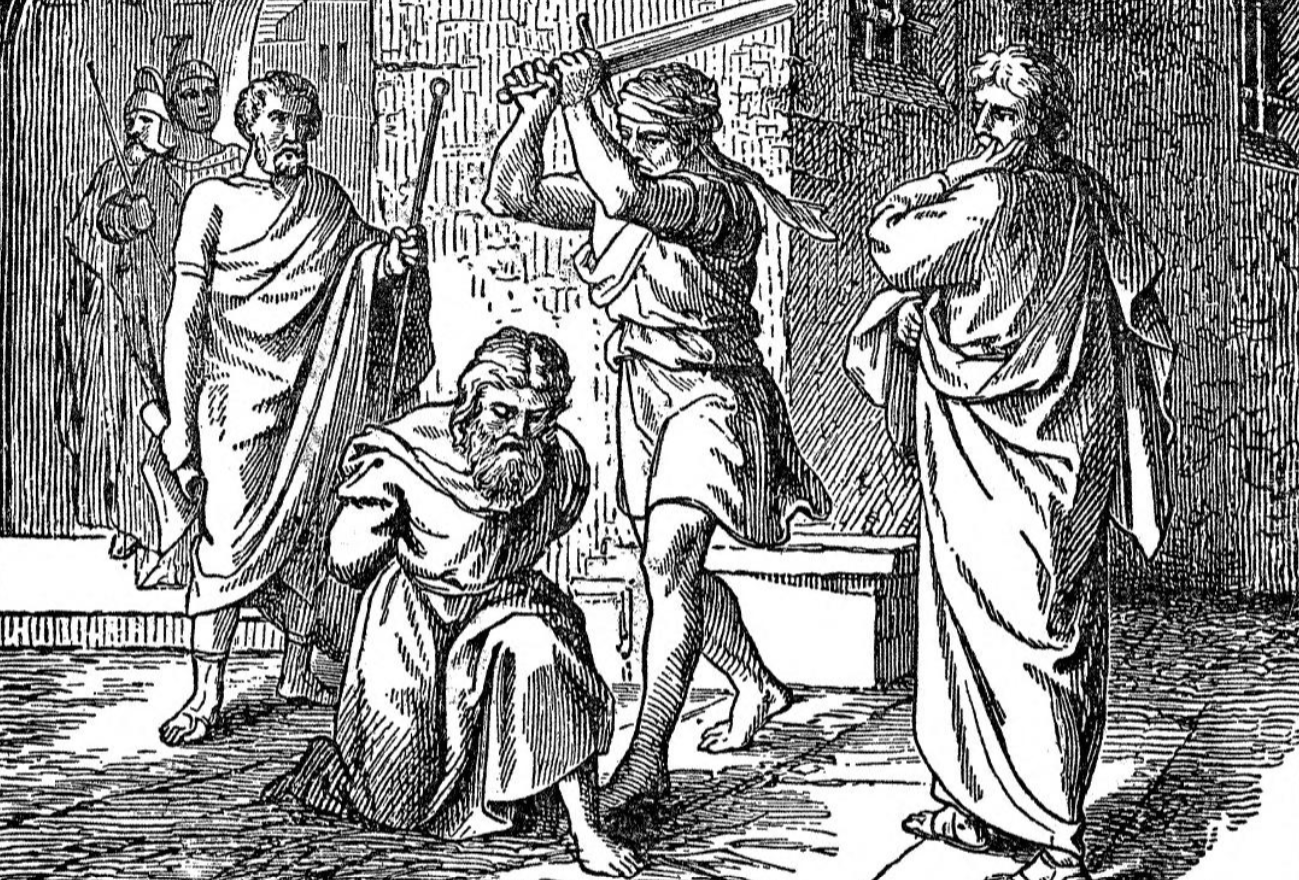
Paul appears to have a sense that his death is imminent. "For I am already being poured out like a drink offering, and the time for my departure is near. I have fought the good fight, I have finished the race, I have kept the faith." (2 Timothy 4:6-7)
Image: https://margmowczko.com/when-did-the-apostle-paul-die/
"Life of Jesus, emphasizing his last week in Jerusalem, crucifixion, and resurrection." 2
Mark is the shortest of all of the Gospels, and is believed to have been written first. It is known as the Passion Gospel due to its focus on the sufferings of Christ. Mark's message is that to live for Christ is to partake in His suffering.
"Life of Jesus, stressing how it fulfilled God’s covenant with Israel and the importance of Jesus’ teachings." 2
"Generally speaking, tax collectors were unpopular in regions under Roman rule. Matthew—also known as Levi (Luke 5:27)—must have been thankful for Jesus’s gracious invitation to join his followers and be a witness to the coming of the Messiah. His gratitude shows in the care he took in authoring the Gospel that bears his name." 3
"Defends the Christian faith as superseding the Mosaic covenant, emphasizing that Christ is superior to the angels, to Moses, and to the Aaronic priesthood. He is our great, heavenly High Priest, and is all-sufficient for our salvation." 2
"It is not clear who wrote Hebrews. In contrast to Paul’s thirteen canonical letters, Hebrews does not name its author. It is written in a Greek style that seems different from Paul’s. It never uses the phrase “Christ Jesus,” a title used elsewhere by Paul some ninety times. It lacks the Pauline greeting at the letter’s beginning. Ancient church leaders were accordingly unsure of who wrote it" 3
"Peter’s letter calls God’s chosen people to purity and spirituality, including dedication to Christ alone; perseverance in the face of persecution; submission to divinely-instituted civil authority; the roles of husbands and wives; and living godly lives." 2
"There has been discussion about the precise literary nature of [Peter's] letter, with some suggesting that it is a baptismal liturgy or a baptismal sermon. However, it is written in the ordinary style of a letter of that day, so there is no compelling reason to see it as anything other than a letter of encouragement to beleaguered believers." 3
"Peter warns believers to remain in the truth, opposing false teachers and their heresies, and holding fast to the certainty of Christ’s second coming." 2
"one of his major aims is to comfort and encourage his friends in the face of the savage treatment they can expect because they are believers in Christ. They are not to be surprised at the intensity of the suffering they are experiencing, as though something strange were happening to them; rather, they are to rejoice (1:6; 4:13)." 3
"Jude condemns false teachers and calls believers to remain faithful to Christ." 2
"It is not possible to speak with certainty about the place or time of writing, since sufficient evidence is lacking. Placing it somewhere in PALESTINE, where it is thought Jude ministered in the AD 60s to the 80s, would be a reasonable assumption." 3
"A record of apocalyptic visions granted to John the Apostle, in exile on the island of Patmos. The visions are preceded by the content of letters written to seven churches suffering severe persecution during the latter part of the 1st century AD. The book stresses the lordship of Christ, the sovereignty of God, and his final victory over sin and evil." 2
"There is very strong early testimony (JUSTIN MARTYR, IRENAEUS, TERTULLIAN, ORIGEN, HIPPOLYTUS) that this John was John the apostle, who also wrote the Gospel and three letters. There is some ancient dissent about this, but it was usually for dogmatic reasons."
"Throughout the history of the church there have been numerous theories of how to interpret Revelation. Donald Guthrie lists nine basic theories, but for our purposes, four stand out as most significant: the historic premillennial view, the amillennial view, the dispensational premillennial view, and the postmillennial view." 3
"John exhorts his readers to hold fast to the fundamentals of the faith, revealed in Jesus Christ, in the light of the dangerous heresy associated with the philosophy of Gnosticism—a pagan worldview that grew and plagued the early church in the 2nd century AD." 2
"It is not clear who wrote Hebrews. In contrast to Paul’s thirteen canonical letters, Hebrews does not name its author. It is written in a Greek style that seems different from Paul’s. It never uses the phrase “Christ Jesus,” a title used elsewhere by Paul some ninety times. It lacks the Pauline greeting at the letter’s beginning. Ancient church leaders were accordingly unsure of who wrote it" 3
"The importance of love in Christian fellowship; warnings against false teaching, especially that of traveling Gnostic heretics." 2
"John addresses this short letter to “the chosen lady” (and her children), whom some take to be a woman who allowed a church to meet in her house and others think is a personification of a particular church. In either case the message is the same. Second John emphasizes the same things that are found in 1 John. John underscores the necessity of walking in love, repeating the statement that this is no new command but one Christians have had from the beginning (5–6)." 3
"John writes here primarily about providing hospitality for traveling Christian teachers, and commends several church leaders for doing so." 2
"Gaius is commended for being faithful to and walking in the truth (3–4). He is also commended for showing hospitality to traveling Christian evangelists or missionaries (8). All is not well, however. Diotrephes is not willing to help other Christian workers. He prefers to gossip, rejects John’s advice, and expels from the church those who seek to help those laboring to further the true gospel (9–10). He does this, apparently, because he cannot tolerate any competition and wants to be first. Demetrius, however, is well spoken of by everyone—the embodiment of good and not a troublemaker like Diotrephes. John closes his short letter to Gaius as he has closed 2 John, by saying he has much to communicate but prefers to do it face-to-face rather than on paper (13–14). His concluding greeting emphasizes the friendship that ha" 3
"Life of Jesus, written to reveal him as Christ, the Son of God." 2
"The Gospel of John differs from Matthew, Mark, and Luke because 90 percent of it has no direct parallel with these three: it postulates a ministry of three years rather than one, it focuses on different parts of Jesus’s teachings, and it emphasizes Jesus’s ministry in a different manner." 3